

By R.L. Bynum
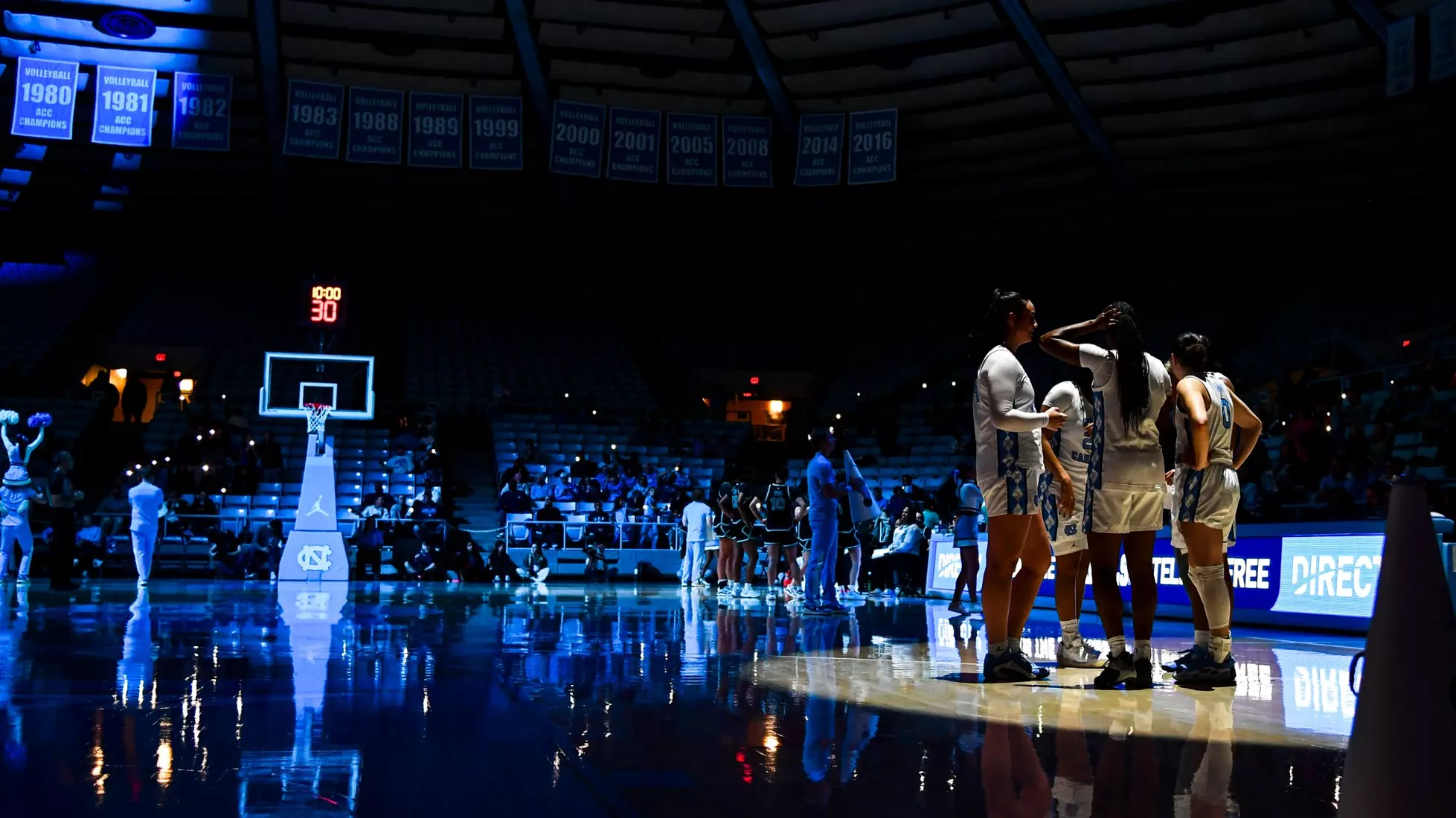
The tradition of the Carolina women’s basketball home games in a classic and beloved venue will end.
Whichever arena option UNC chooses, whether it be building a new arena or renovating the Smith Center, the women’s program will play there, and the men’s and women’s teams will have separate practice facilities.
Depending on the timeline, that could mean two or three more seasons in Carmichael Arena for Coach Courtney Banghart’s program. This is the 60th season in which at least one UNC basketball team has played in what was called Carmichael Auditorium until 2009, but tradition will soon give way to a newer, nicer home.
“I think sometimes people, because they love watching games in Carmichael, they assume we want to stay,” Banghart said. “We’ve kind of outgrown [the facilities] in some ways.”
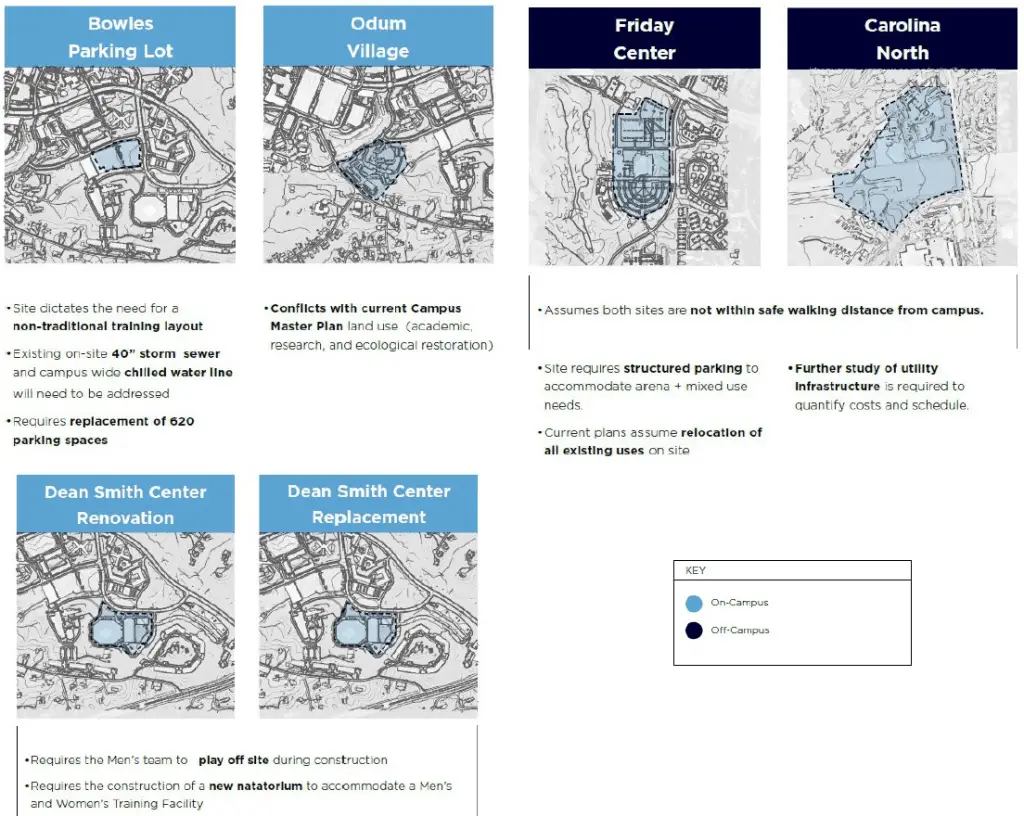
To build two practice facilities, a Smith Center renovation project would require demolishing the 40-year-old Khoury Natatorium, which would add additional costs to build a new home for the swimming and diving team.
While a construction or renovation project wouldn’t affect home games for the women’s team, the men’s team would have to find a two-season temporary home, and likely play many games in Greensboro.
Would Carolina be as attractive to a one-and-done men’s player if they knew there would likely be many home games outside of Chapel Hill?
All options call for a 16,000-seat arena. Of the five options for a new arena, the most likely is at the Carolina North site. Others include building on the Bowles Lot, at Odum Village and at the Friday Center.
Carolina’s women’s program is in its 54th season at Carmichael after games shifted from the dangerously small Women’s Gymnasium for the 1971–72 season.
“I understand that some of the nostalgia and history would be lost,” she said. “I think people like good teams, wherever those teams are. If revenue now sort of determines how good your team can be, then we should prioritize revenue.”
There was excitement when the men’s program moved from Carmichael Auditorium after 20 seasons to the Smith Center in 1986, but also a sense of loss and sadness from many.
That will soon play out for fans of the women’s program, one of only two in the ACC (N.C. State’s women play at Reynolds Coliseum) that play in a different arena from their men’s teams.
Banghart understands why fans feel so connected to the building, which was renovated in 1998 and 2008.
“It’s one of the best arenas in college basketball, especially for women,” Banghart said. “I think people are change-resistant in general. It’s just a human trait.”
Her program is in its second full season using a practice facility adjacent to Carmichael and Woollen Gym. That addition has given her more flexibility as the volleyball, gymnastics, and wrestling teams also call Carmichael home. Still, space limitations remain.
“I’m sure the new arena will be really, really awesome, whatever it is,” Banghart said. “It will be more updated with all the recovery [space] that these guys need and a bigger space.”
In Carmichael’s current setup, Banghart says that she can’t even fit her entire team and staff in the program’s film room at the same time. The dressing room in Carmichael is nice, but it’s a small, narrow, rectangular space.
Banghart makes countless decisions for her program but is relieved that she isn’t the one deciding the arena’s future.
“I support the decisions that are made,” she said.
Players aren’t heavily involved in venue decisions, either, although former men’s players have been extremely vocal about their preference that the Smith Center be renovated. When asked, at least one women’s player echoed the same mix of appreciation and openness to change.
“Oh, I love playing in Carmichael,” said freshman Nyla Brooks, who could play in the new facility by the end of her Carolina career. “But if we could get some new stuff, we wouldn’t mind it.”
Banghart said she sees the complexity behind the decision and the many factors driving it. She noted that the decision-makers have more information than everybody else. Revenue, she said, plays a major role.
“Times have changed where revenue really matters,” she said. “And we see we sell out men’s games night after night, and however we can get the most revenue from that would help all things.”
She also emphasized the value of modernizing athletic spaces.
“Anything new means that it’s more caught up in terms of recovery space and nutrition and all the ways that athletics has changed since the Dean Dome was built,” she said. “You put it under one roof, men and women together, there’s a lot of value to that, too.”
Regarding whether a larger venue could change the atmosphere, Banghart said the essence of the program won’t shift.
“People aren’t coming for the seats or the brick and mortar. They’re coming for the teams,” she said. A bigger venue, she said, would “mean an opportunity for more fans,” and as long as the team stays strong, she expects more fans to come.
Banghart is involved only in the basketball‑specific conversations about the project.
“Those [meetings about] funding it don’t include me, the ones dealing with zoning in the state don’t include me, the ones that involve the basketball part of it include me,” she said.
She added that Chancellor Lee Roberts has built a variety of committees comprised of people with the appropriate expertise, and that she and men’s coach Hubert Davis contribute where it matters.
“[We] really understand what makes a good basketball arena, whether it’s a rebuild or a new [arena],” she said. “So those [discussions] are the ones that we’re a part of.”
As the decision draws closer, Banghart looks toward the future with optimism. She knows change is coming, knows it will reshape the heart of her program, and knows it will be rooted in the long-term vision of both UNC basketball programs.
Photos courtesy of UNC Athletics

 tarheeltribune.com