

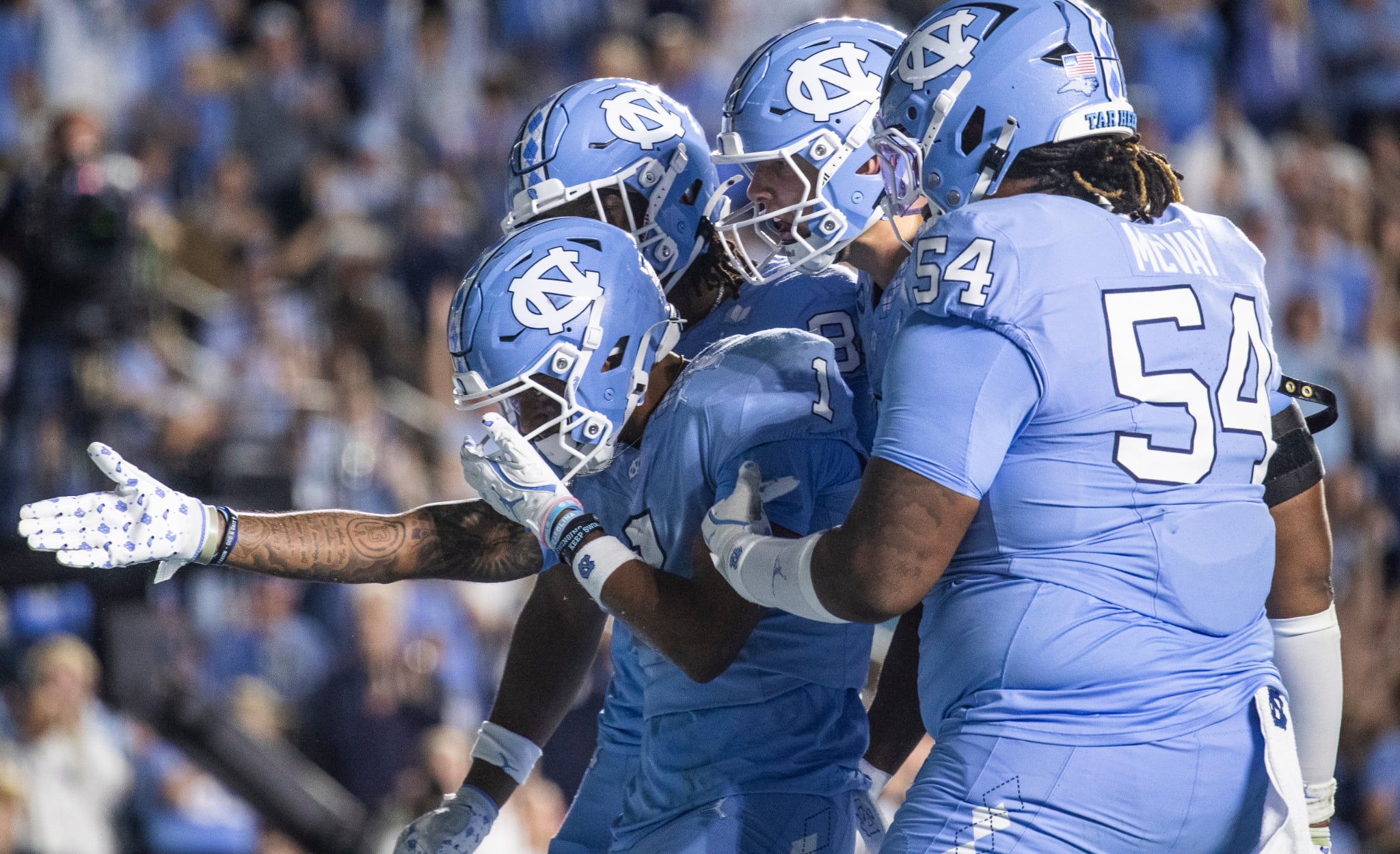
By R.L. Bynum
CHAPEL HILL — The story of North Carolina’s football season isn’t one game or one call. It’s the accumulation of small edges lost and big moments missed, all after a massive offseason roster turnover and a highly paid head coach and staff trying to install new standards and a new identity.
Coach Bill Belichick and his staff have fallen well short of whatever identity he or Tar Heels fans expected.
With Saturday’s result, the Tar Heels, at 4–7, clinched a losing record. The bigger question is how to understand the path to this point — and how to think about what’s ahead.
From the outset, expectations were natural and, for many, unavoidable when you hire a legendary coach.
Asked after the game if he let the fans down after only winning two home games and what his message is to the fans, Belichick only answered the last part.
“We’re going to keep competing every week,” he said ahead of the game at N.C. State at 7:30 Saturday (ACC Network). “That’s what we’ve been doing. So, that’s not going to change.”
The school made a bold hire, spent plenty of money and expected a lot in return. The promise of a demanding, detail-obsessed approach was supposed to be a foundation for tight, disciplined football, and the Tar Heels had the benefit of a soft schedule.
How many times did commentators before the season say that a Belichick team isn’t going to beat itself? Those comments have obviously not aged well.
It was much messier than the preseason storylines suggested. Each Saturday, several decisions or mistakes were enough, given the thin margin of error, to produce losses or less-than-impressive victories.
In Saturday’s 32–25 loss to Duke, a season-high 12 penalties were the most damaging, but defensive and special-teams lapses and offensive line breakdowns also played a part.
It was definitely not complementary football. Despite rallying from 14 points behind to take the lead, the Tar Heels again showed the inability to win the moments that decide games.
“We get them first, second down, we play well. Third, fourth down, we’ve got to play better going forward,” linebacker Andrew Simpson said. “They won the moments.”
That pattern of failures with the game on the line has been repeated often this season. The players’ view was candid and unsparing. Wide receiver Jordan Shipp summed it up.
“We lost seven games,” he said. “We beat ourselves in seven games, and we didn’t play to our standard in seven games. That’s what it comes down to. There’s not too many plays you can go turn on, or where there’s somebody out-physicaling us, or somebody’s out-coaching us. It comes down to us being ourselves.”
The players are trying to be consistent from week to week, but that’s more of a challenge in a season after the roster was reshaped and the preseason expectations were unreasonably through the roof.
Shipp addressed the gap between preseason hope and the reality of building with so many new players.
“Nobody thinks you’re going to come into the season four and seven, no matter who’s your coach,” Shipp said.
Shipp admitted that the team’s expectations were just as high as they were for fans.
“Everybody’s thinking you’re going 12 and 0, you’re going to make the playoffs, you’re going to win the national championship,” Shipp said. “We were thinking the same thing. But whole new staff, whole new team. We just started gelling a little later, and things happen.”
The human part of a season often gets lost behind the losing record. Shipp refused to let it. He talked about the relationships forged through the shake-up and the cross-country connections that only happen when a staff turns over a roster.
“I wouldn’t trade this season in for nothing else,” Shipp said. “I wouldn’t trade the relationships that I’ve built with a lot of those guys. … That’s just God bringing people together.”
In a locker room, culture and competitive habits matter.
Belichick’s framing of what comes next was pragmatic and forward-looking. He understands the process of evaluation, adjustment and personnel movement that defines college football in the NIL era.
“At the end of the season, when that time comes, we’ll go back and take a look at things and make some adjustments. Obviously, there’s gonna be a lot of personnel turnover,” Belichick said, noting the 22 players who participated in the pregame senior day ceremony.
Roster cycles are relentless: seniors exit, portal decisions follow, recruits arrive. Fit and development become the story, especially at positions where situational performance makes the difference in one-score games like the ones that Carolina lost.

“I’m sure there will be other players that will be transitioning on,” he said. “We have players coming in. So, we’ll see all that goes. We’ll evaluate everything we do. [You] always try to find a little better way of doing it — more efficient, or maybe there’s a better idea to do it a better way than we’re doing it.”
Heading into what likely will be the final week of the season, Belichick says the focus will be on competing and looking ahead. Should UNC beat the Wolfpack, a bowl is still possible because of the school’s high APR if there aren’t enough six-wins teams to fill all of the bowl slots.
Simpson had an urgent message to his teammates.
“We’ve got the next 24 hours to watch it, and then get ready for State,” he said. “It’s a big game. We’ve got to finish strong. My biggest thing — I just want to beat State. That’s where my mind is now.”
Those next steps, though, will sit alongside offseason choices that shape whether there is improvement in season two under Belichick.
The Tar Heels’ issues this season are familiar across programs in transition, but somehow Wake Forest has won eight games, including beating UNC, under a first-year coach.
There have been penalties to extended drives, missed tackles, and sequences where the opponent was more poised under pressure.
“Once it’s over, it’s over, there’s nothing you about it,” Belichick said. “You’ve got to move on.”
For Carolina, the goal is a win in Raleigh, then build a roster that can rebound from a frustrating season.
Photo by Smith Hardy

 tarheeltribune.com