

By R.L. Bynum
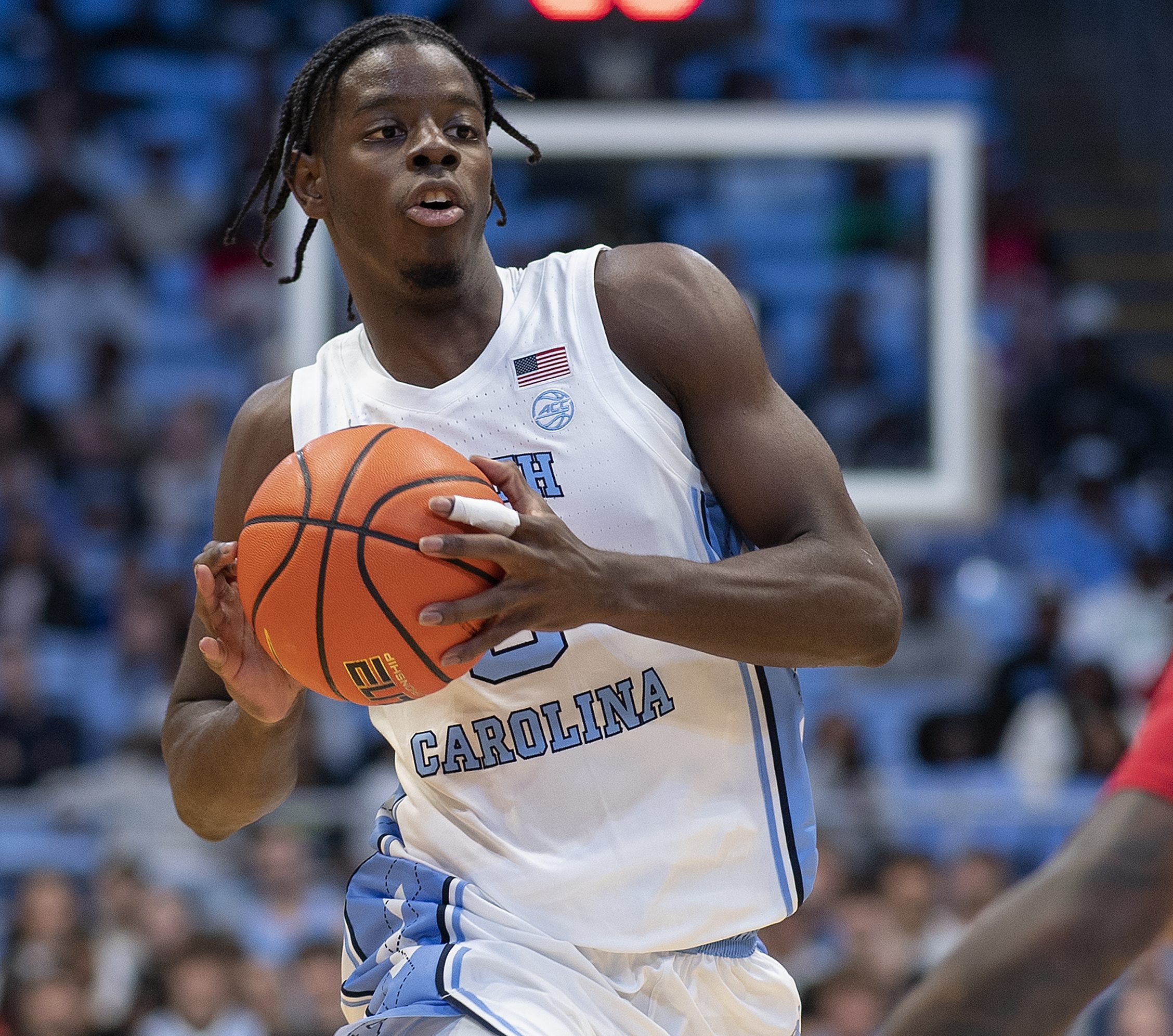
North Carolina has confirmed that Caleb Wilson fractured his left hand during the first half of Tuesday’s loss at Miami, but further specifics about the injury or the recovery timeline aren’t known.
One possibility, according to Dr. Peter Dalldorf, an orthopedic surgeon with EmergeOrtho Greensboro, is a scaphoid fracture, a tricky wrist injury that can sometimes be difficult to detect immediately.
That might explain why it didn’t show up on X-rays in Miami and was only uncovered after further imaging upon Wilson’s return to Chapel Hill.
Dalldorf, a sports medicine specialist who previously worked with the Houston Rockets during Kenny Smith’s time there, said the circumstances fit a familiar pattern. He stressed that all of his observations are speculative and that the best information will come from Wilson’s treating physicians.
Inside Carolina reported Friday that, according to sources, no surgery will be needed and that the timeline is expected to be three to four weeks.
“I suspect he has a non-displaced scaphoid fracture, because that’s a bone that you can break, and it won’t show up on a regular X-ray at first, unless it’s out of place,” Dalldorf said. “Son non-displaced means it’s not out of place. So he probably cracked that bone. You can’t see it on a regular X-ray. But he was still hurting when he got back to Chapel Hill, so they probably got a CT or an MRI, and that will show the crack in the bone.”
That would help explain why the injury apparently didn’t appear during the initial X-ray in Miami. Dalldorf said it’s common for athletes to need more advanced scans, such as an MRI or CT, before the fracture becomes clear.
“That’s not surprising at all, and it’s good they did that extra imaging,” he said, noting that sometimes teams can mistakenly assume everything is fine after a clean X-ray. “They did a good job of picking that up.”
More on Tar Heels
— Wilson out with fracture in left hand
— Where does UNC go from here while playing without Wilson?
— UNC rises to season-high rank in AP Top 25
—Repeated slow starts, answers to fix that, confounding Tar Heels
— Tar Heels blow most of NET gains from Duke win at Miami
— Heels can’t match Miami’s energy, falter on defense, rebounding
If Wilson’s injury, which occurred at 6:08 in the above video, is indeed a scaphoid fracture and it remains stable, the recovery timeline could still be significant. Dalldorf explained that the healing process can sometimes be slow.
“It’s a bone that sometimes heals really slowly because it doesn’t have the greatest blood supply,” he said. “Sometimes, if it’s not out of place, you treat it kind of like a stress fracture. You can treat it in a splint, and it might get better in four to six weeks.”
That timetable, however, could effectively end Wilson’s season, given the calendar. Dalldorf acknowledged as much when discussing the timing, considering that it’s mid-February, if it’s the sort of injury he thinks it is.
“I think it’s probably season-ending,” he said.
There is a possibility Wilson could attempt to play with protection on the hand, since it is his non-shooting hand, but Dalldorf said any brace would be restrictive.
“The problem is the brace that he would need would have to encompass the thumb because that bone goes out towards your thumb,” he said. “So, restrict the motion of his thumb, so he could potentially play in a brace. It would make things difficult. If I were his doctor, I wouldn’t have him play just because he’s got such a bright pro career coming up. You don’t want to mess this up.”
Another option in some cases is surgical stabilization. Dalldorf said if the bone is even slightly displaced, doctors sometimes insert a screw, which can speed recovery, though surgery is not always the first choice.
“No one likes to have surgery if they don’t have to have surgery,” he said. “Most people, we don’t recommend putting the screw in initially; we see if it’ll heal. You give it a month, and then if you get follow-up imaging and it doesn’t look good — it’s not healing — then you recommend the screw.”
Wilson’s injury also carries echoes of past Carolina stars who dealt with the same type of fracture.
Dalldorf noted that both Smith and Kendall Marshall suffered scaphoid injuries during their Carolina careers — Smith’s when LSU’s John Tudor clotheslined him in the Tar Heels’ home win Jan. 29, 1984, over LSU (above video), and Marshall’s when Creighton’s Ethan Wragge fouled him hard during an NCAA tournament game on March 18, 2012. The video below shows Marshall’s injury and includes Smith talking about the play.
In both cases, UNC teams with national-championship potential had their seasons unravel.
“Both of them had” a scaphoid fracture, Dalldorf said, describing it as “a bone that typically can break in the wrist, and it doesn’t heal very well.”
Because of that, he added, “You really exercise a lot of caution in the treatment of the injury, especially in a potential lottery-pick athlete.”
For Wilson, the decision will likely depend on the exact diagnosis and how quickly the injury responds to treatment, with North Carolina awaiting further clarity on whether its standout player could return before the season concludes.
Photo courtesy of UNC Athletics

 tarheeltribune.com